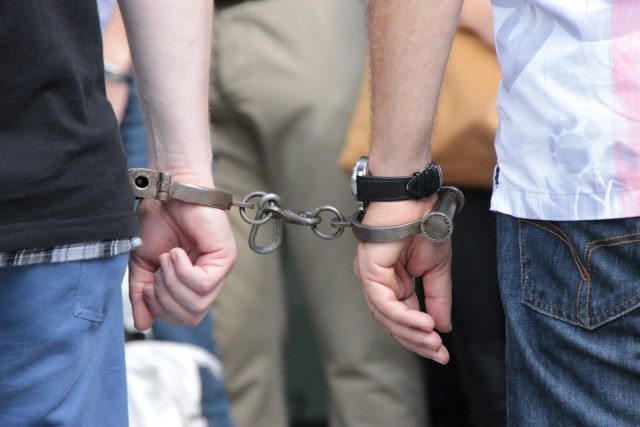
An arrest has a way of making people reach for their phones. Someone wants to explain what happened on Facebook. Another person starts scrolling through old photos and messages, looking for anything that could be taken the wrong way. Deleting a few questionable posts can suddenly feel like common sense.
It’s usually the wrong instinct.
By that point, the digital record may already extend well beyond what’s visible on your phone. Investigators can look at public posts, location data, messages, account records, and information held by third-party providers. Some records can even be preserved by providers while investigators pursue the legal process required to obtain them.
That creates two records at once: the digital history investigators are assembling and the one you’re still capable of changing. After an arrest, the safest approach is usually not to explain, clean up, or disappear online. It’s to stop posting, preserve what exists, and let your attorney decide what matters.
Two Trails Start Running the Minute the Cuffs Come Off
Most people picture evidence as the physical stuff at the scene, the breath test, the dashcam, maybe a witness or two. That’s a small slice of what a modern case actually turns on. The bigger slice lives on servers you don’t own.
Investigators know this, and they move fast. Federal manuals like the DOJ’s guide on electronic evidence walk agents through how to preserve, request, and eventually pull records from providers. The account holder, meanwhile, often has no idea any of it is happening.
That asymmetry is the whole problem: their trail is being built with subpoenas and preservation letters while your trail is being edited in a panic by whoever has your password.
Your Data Can Be Frozen Before You Know a Warrant Exists
Under 18 U.S.C. § 2703(f), a provider of electronic communication or remote computing services must, on a government request, take all necessary steps to preserve records pending a court order. Preserved data is held for 90 days and can be extended another 90 on a renewed request. No judge signs off on the initial request. The subscriber gets no notice.
The practical effect: for up to six months, an account can be frozen in place while investigators build the paperwork to open it. Deleting a post after that clock has started doesn’t erase anything on the provider’s side. What it does is add a new fact to the case, which is that you deleted it.
Stop Posting, Stop Deleting, Start Preserving
This is where the two trails intersect. What you do with your own accounts in the days after an arrest either backs up the story your lawyer will tell or undercuts it. A few ground rules apply almost across the board:
- Go dark on public accounts. No posts about the incident, the officers, the other driver, the alleged victim, the case, or your mood. Set profiles to private, but don’t scrub them. Tell friends and family to stop posting about it too. Screenshots travel.
- Do not delete anything. Not a photo, not a tagged post, not a group chat, not a dating-app conversation, not a Venmo memo. If a prosecutor can show a deletion happened after you knew charges were coming, that’s a separate problem stacked on top of the original one.
- Save your own copy. Most major platforms let you download a full archive of your account. Do that early, store it somewhere offline, and hand it to your attorney.
- Write down the timeline. While memory is fresh, note where you were, who you were with, what devices you had, and what apps were open. Location history, ride-share receipts, and step counts have all corroborated defenses. They’ve also sunk them.
- Change passwords, not accounts. Lock down access so a nervous relative can’t decide to help by cleaning things up. Deactivating an account entirely can look like destruction of evidence, even when nothing was actually deleted.
Assume Investigators Are Already on Your Feed
Long before a formal warrant lands, someone is looking at the public version of your life. Open profiles, tagged photos, check-ins, comments on friends’ posts, review-site history, even the venue’s own social media from the night in question. None of that requires a subpoena. It’s already sitting there.
Anything set to “public” should be treated as evidence in waiting. That includes the accounts of the people you were with. A friend’s story tagging you at a bar two hours before the arrest is now part of the timeline, whether you like it or not.
That’s why the earlier advice matters. Staying private, silent, and preserved tends to serve you better than staying visible, chatty, and edited. A good criminal defense attorney can tell you which pieces of your digital footprint the prosecution will lean on and which ones actually help, so the archive you’re saving becomes a defense tool instead of a liability.
Your Best Move Is to Leave the Record Alone
After an arrest, the urge to explain, delete, or clean up your online history can create problems that weren’t there before. Preserve what’s already there, stop adding to the record, and let your attorney determine what matters. The less you change in a panic, the fewer digital decisions you’ll have to explain later.