In a narrow shophouse on Bangkok’s Charoen Krung Road, a 29-year-old barber named Thanapol Wittayakorn cuts hair six days a week. He has no employees, no receptionist, and no website in the traditional sense. What he does have is a booking link pinned to his Instagram bio, a Google Business profile with a 4.9-star rating, and a client list that books out two weeks in advance.
Thanapol is part of a generation of solo entrepreneurs across Asia who are building viable service businesses without the overhead structures that previous generations considered essential. No storefront app. No franchise agreement. No booking desk. Just skill, a smartphone, and a few digital tools.
THE SOLO SERVICE ECONOMY
The numbers tell a story of structural change. According to the International Labour Organization, self-employment accounts for roughly 53 percent of total employment in Southeast Asia. While much of that is informal, a growing subset consists of skilled service providers — barbers, stylists, massage therapists, personal trainers, tutors — who operate independently by choice, not by default.
What has changed is the infrastructure available to these solo operators. Five years ago, an independent barber in Bangkok or Kuala Lumpur who wanted online booking had two options: pay a developer to build a website or sign up for a salon management platform designed for multi-chair operations. Both were overkill.
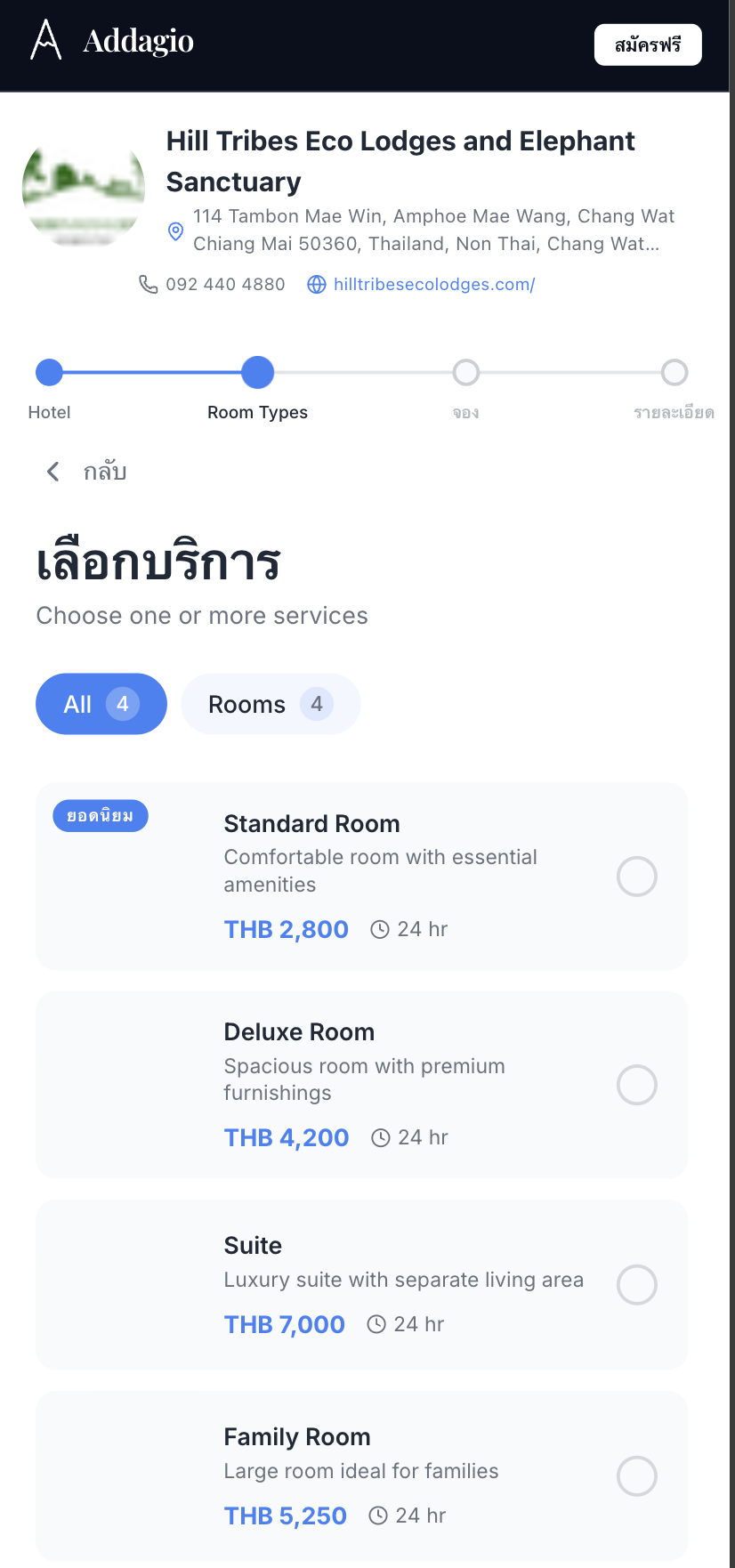
Today, tools have caught up with the market. Booking page builders like Addagio allow solo service providers to create a simple online presence — a page that shows their services, prices, and available time slots — in minutes rather than weeks. The simplicity is the point.
BANGKOK’S INDEPENDENT BARBER SCENE
Bangkok’s barbering culture has exploded in recent years. The city now has hundreds of independent barbers and small shops, many concentrated in areas like Ari, Thonglor, and the Charoen Krung creative district. These are not traditional Thai barbershops but modern grooming studios, often run by a single barber who trained through YouTube tutorials, apprenticeships, or formal programs.
For these operators, Instagram is the primary marketing channel. A well-curated feed of haircut transformations serves as both portfolio and advertising. The missing piece, until recently, was converting that Instagram attention into actual appointments without the back-and-forth of direct messages.
“I was spending an hour every evening just replying to DMs, checking my calendar, confirming times,” Thanapol said. “Now I just point people to my booking page. They pick a slot, I get a notification.”
The efficiency gain is meaningful for someone who is simultaneously the barber, the manager, the marketer, and the cleaner.
SEOUL’S FREELANCE STYLISTS
In South Korea, a parallel trend is playing out among freelance hair stylists and makeup artists. The country’s beauty industry is massive — worth an estimated $13.4 billion in 2025 — but increasingly fragmented as experienced stylists leave large salons to work independently.
Korean freelance stylists often operate from shared studio spaces, renting chairs by the day or week. Their client base follows them from salon to salon, connected through KakaoTalk groups and Instagram accounts.
Park Jiyeon, a freelance colorist in Seoul’s Gangnam district, explained the economics: “At a salon, I earned 30 percent of the service price. On my own, I keep everything minus chair rental. But I have to handle my own bookings.”
For Park, the transition to independent work required solving two problems: a portfolio that potential clients could browse, and a booking system that did not require her to answer the phone during appointments.
KUALA LUMPUR’S THERAPY MARKET
Kuala Lumpur presents yet another variation. The city has a growing market for independent wellness practitioners — physiotherapists, sports massage therapists, and mental health counselors who operate private practices.
Malaysian regulations require many health practitioners to work from registered premises, but within that framework, solo and small-group practices are increasingly common. The challenge for these practitioners is discoverability. Unlike barbers or stylists, they cannot rely on visual portfolios on Instagram. Their marketing depends more on Google search results and referrals.
For these businesses, having a professional-looking booking page that appears in search results provides credibility. A therapist with a clean booking page looks more established than one whose online presence consists solely of a Facebook page last updated in 2023.
COMMON PATTERNS ACROSS MARKETS
Despite the differences between a Bangkok barber, a Seoul stylist, and a KL therapist, several patterns emerge.
First, the smartphone is the primary business tool. These entrepreneurs run their entire operation from a device that fits in their pocket. Any tool that requires desktop-only access or complex setup faces adoption barriers.
Second, social media is the storefront. The booking page is not a destination in itself — it is the conversion mechanism that sits behind the social media presence.
Third, simplicity beats features. Solo operators do not need employee scheduling, inventory management, or payroll integration. They need a calendar, a service list, and a way for clients to confirm appointments.
Fourth, the financial calculation is personal. Every dollar spent on tools is a dollar the solo operator does not take home. The tolerance for monthly software subscriptions is low.
WHAT THIS MEANS FOR THE REGION
Asia’s micro-business economy is not a stepping stone to something bigger. For many practitioners, staying small is the strategy. The solo barber does not want to become a chain. The freelance stylist left a large salon precisely to avoid corporate structures.
The technology serving this market needs to match that philosophy — lightweight, affordable, and designed for one person, not ten. The providers who understand this distinction are the ones gaining traction across the region’s diverse and rapidly digitizing service economies.